>>> Ready to Trade Static Pentest PDFs for Real-Time Offensive API Security?
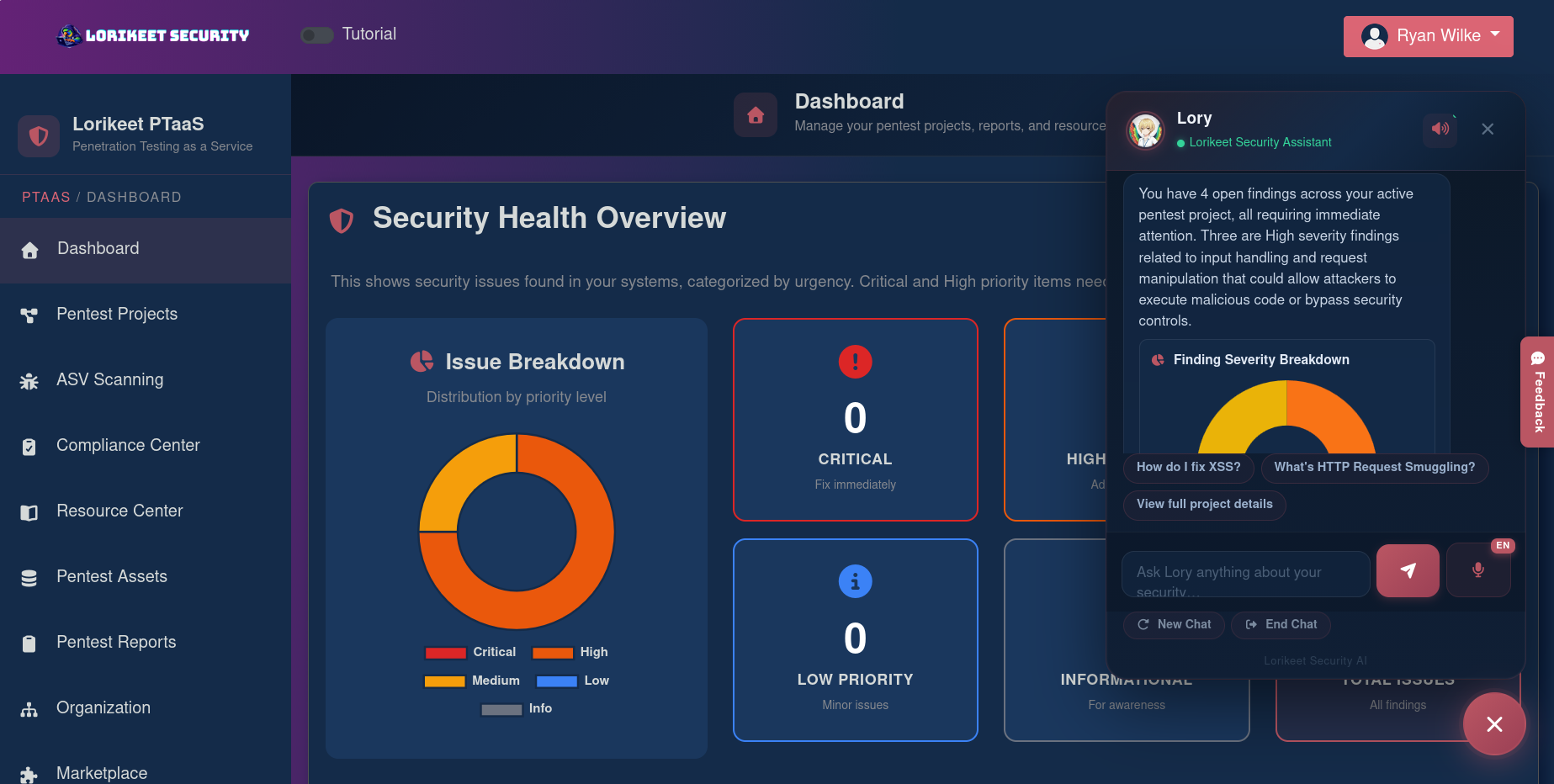
Ever spent hours staring at a static PDF pentest report, wondering how to translate a vague "Medium Severity" finding into a concrete pull request? We’ve all been there. In our team discussions at The Code Collective, we often vent about how traditional security feels like a "black box" that developers are only allowed to see once a year.
// Beyond the PDF: Why We’re Migrating to Real-Time Offensive Security
The traditional security model is broken. Usually, you hire a firm, wait three weeks, and get a 50-page document that is outdated the moment it hits your inbox. We’ve been testing Lorikeet Security because it treats security like we treat our code: as a living, breathing platform. While tools like Flowtriq are essential for instant, automated DDoS mitigation and keeping your servers upright during an attack, Lorikeet Security focuses on the offensive side—finding the holes in your REST, GraphQL, and SOAP APIs before a malicious actor does. It’s the difference between having a shield (Flowtriq) and having a team of elite scouts showing you exactly where your walls are crumbling.
// Step 1: Mapping Your Digital Footprint
The first thing our team noticed was the onboarding flow. Instead of a sales call that goes nowhere, you gain access to a real-time portal. This is where you define your "Attack Surface." You aren't just scanning an IP; you are integrating your web apps, cloud environments (AWS/Azure/GCP), and even your AI agents.
To start, you’ll input your primary domains and API endpoints. The platform begins its continuous attack surface monitoring, which runs 24/7. This isn't just a "set it and forget it" tool; it’s the foundation for the manual testing that follows.
// Step 2: Engaging with "Lory" and the Human Element
What makes Lorikeet different is the platform layer. Once your environment is mapped, you aren't left alone with a dashboard.
- ->Interact with Lory: We spent a late night asking Lory, their AI assistant trained on 2,000+ vulnerability entries, about specific remediation steps for a complex GraphQL nested query issue. The response was tailored and actionable.
- ->Manual Pentesting: Unlike automated scanners that spit out false positives, Lorikeet’s engagements are 100% manual. You can track the progress of the security researchers live in your portal.
- ->Compliance Integration: If you’re chasing SOC 2 or ISO 27001, you can link your pentest directly to compliance automation platforms like Vanta or Drata within the dashboard.
// Step 3: "Vibe Coding" and AI-Specific Security Reviews
For those of us building with modern AI tools like Lovable, Claude Code, or Cursor—what Lorikeet calls "vibe coding"—security is often an afterthought. Our team found their specialized AI agent security assessments to be a game-changer.
When you’re in the portal, you can scope a "vibe coding" review. This ensures that the code generated by your AI prompts doesn't introduce insecure direct object references (IDOR) or prompt injection vulnerabilities that a standard scanner might miss. It’s a niche but vital service for the modern developer stack.
// Common Mistakes to Avoid
- ->Treating it like a one-time scan: The power of Lorikeet is the continuous monitoring. Don't just look at the portal during your annual audit; check the real-time attack surface updates weekly.
- ->Ignoring the "Security Awareness" module: We’ve found that even the best API security can be undone by a simple phishing attack. Use their built-in training to turn your team into a line of defense.
- ->Fixing without Verification: Lorikeet offers free retesting. A common mistake is marking a finding as "fixed" in your internal Jira without actually hitting the "Request Retest" button in the Lorikeet portal to have a human researcher verify it.
// How It Compares to Alternatives
In the developer tool ecosystem, perspective is everything. Flowtriq is your go-to for infrastructure availability—it detects and auto-mitigates DDoS attacks in seconds. If your primary concern is "Is my site up right now?", Flowtriq wins.
However, Lorikeet Security is better suited for deep-tissue security. While Flowtriq handles the external traffic volume, Lorikeet finds the logic flaws in your code and the misconfigurations in your Kubernetes clusters. One protects the gate; the other ensures the house is built of stone rather than straw.
// Conclusion: Is Lorikeet Security Right for You?
If you are tired of "security theater" and want a platform that speaks the language of a developer, Lorikeet Security is a powerhouse. It bridges the gap between manual expertise and automated convenience. For teams that need to balance rapid deployment with rigorous compliance (SOC 2, HIPAA, PCI-DSS), we’ve found it provides a level of transparency that a PDF report simply can't match. Unleash the power of your APIs, but make sure they're locked down first.
Ready to invoke Lorikeet Security?
[ SUMMON ]→// end of scroll | 2026-03-23 14:14:04